Hastings Sunday 1st October 1066
As fast as the Normans pull down the posters, the more they appear and the crosser Bill gets.
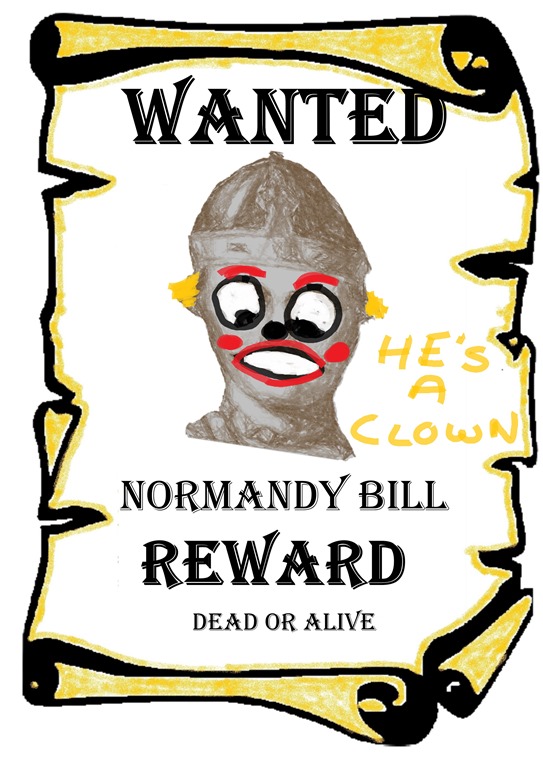
The Normans seem to be chasing their tails.
Nobody has come forward to claim responsibility.

Hastings Sunday 1st October 1066
As fast as the Normans pull down the posters, the more they appear and the crosser Bill gets.
The Normans seem to be chasing their tails.
Nobody has come forward to claim responsibility.
Saturday 30th September 1066 – Hastings
The Saxon Times reports that last night throughout Hastings leaflets were pinned to doors and trees purporting to offer a reward to ‘Kill Bill’.
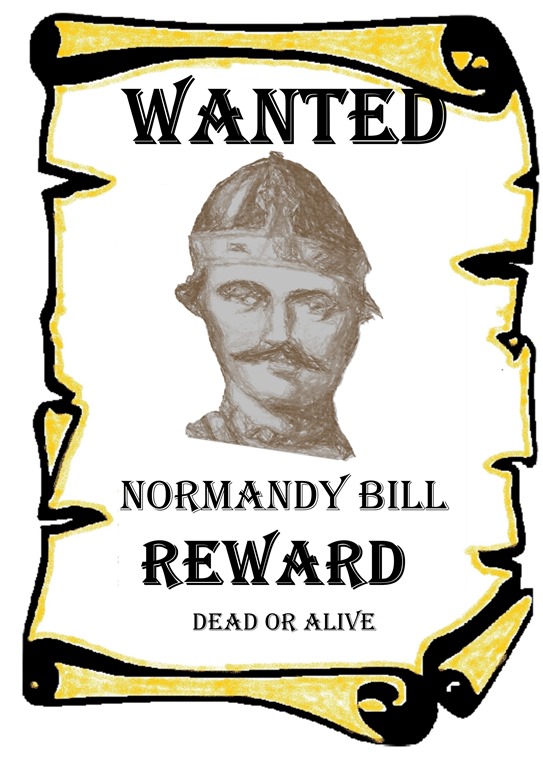
The Norman hierarchy first dismissed the posters as a prank but it is understood, from sources close to the Duke, that Duke William was apoplexic with rage and demanded that the culprits be brought to summary justice.
There is now tension within the town as the Norman ‘police’ investigate the mysterious ‘poster’ poster.
We will continue to follow this story as the investigation unfolds.
For all the latest news read The Saxon Times: www.1066thesaxontimes.com
The following is reprinted from an article in the Norman newspaper ‘Le Monde Du Normandie’ published 29th September 1066.
The Noble Quest For The Throne Of England
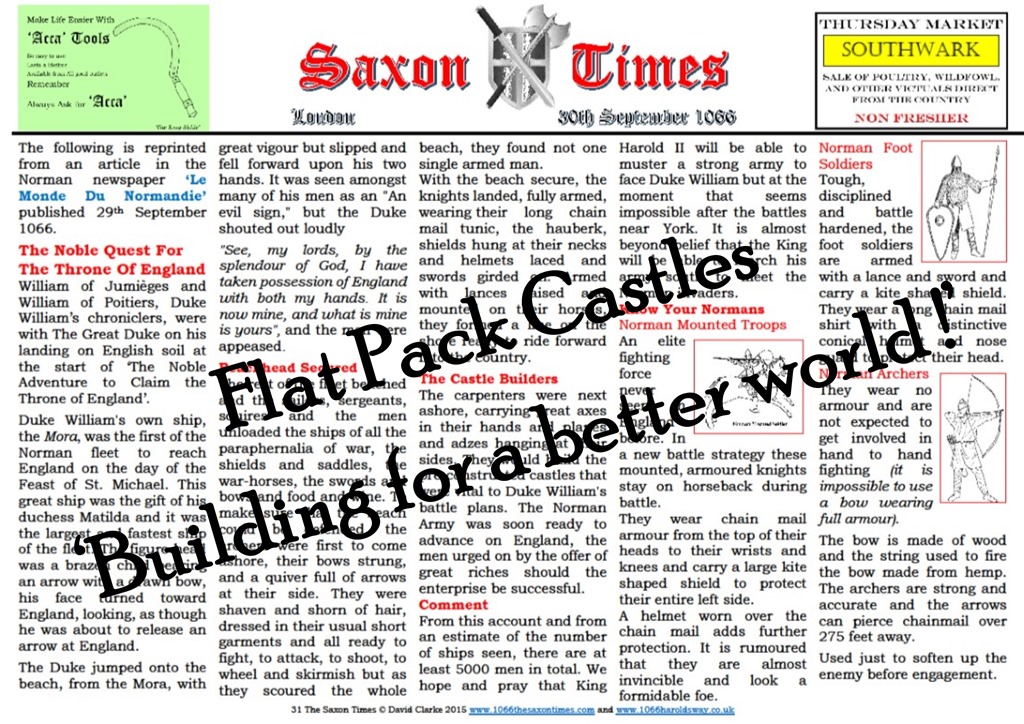
William of Jumièges and William of Poitiers, Duke William’s chroniclers, were with The Great Duke on his landing on English soil at the start of ‘The Noble Adventure to Claim the Throne of England’.
Beachhead secured and is spread across the wide Pevensey Bay from west to east towards Bexhill.
The Norman cavalry, foot soldiers and archers disembark and take their first steps on English soil.
Next are the carpenters who have been ordered to assemble a castle on the site of the old Roman fort from panels already constructed in Normandy and brought over with the invasion. Even the boats are being taken apart as part of the castle construction.
If they are defeated by King Harold there is no chance of them returning home but any such talk is quickly quashed by Duke William with promises of untold wealth.
But with King Harold in York, it has given the Duke free reign in Wessex to build a strong base rumoured to be at Hastings.
This issue of The Saxon Times is included in the 1066 Saxon Times Resource book: www.1066thesaxontimes.com
Today, 29th September, is the celebration of Michaelmas. St Michael, the warrior Archangel, is honoured as the protector of the individual against evil forces. Let us all hope that St Michael looks kindly on this Anglo-Saxon England and protects us all from the evil overseas.
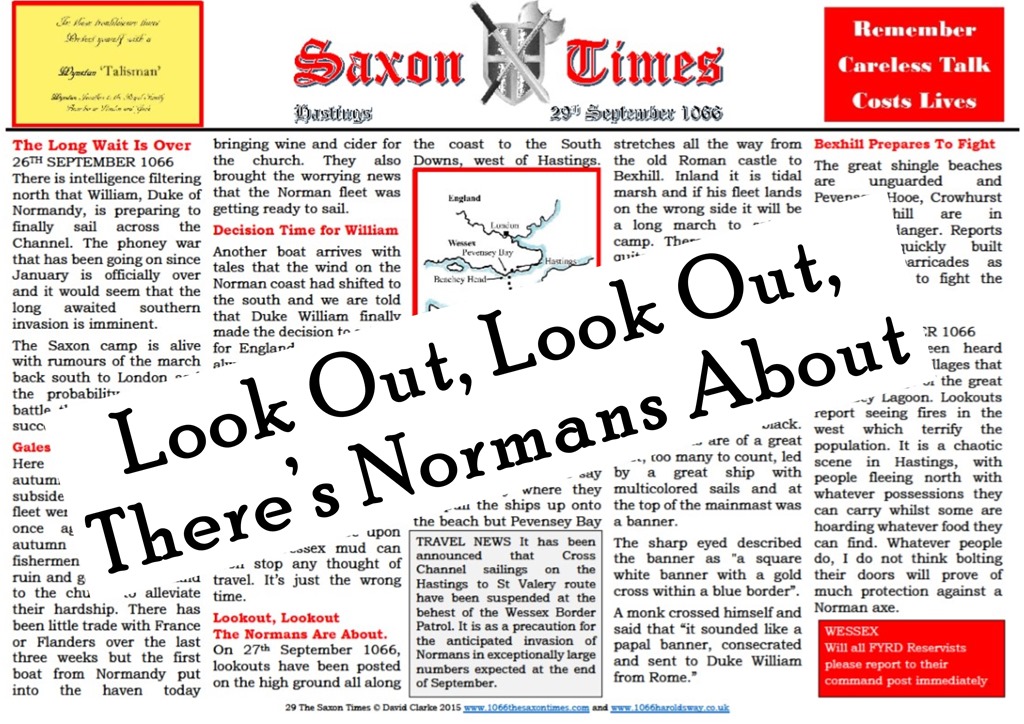

Travel News
It has been announced that Cross Channel sailings on the Hastings to St Valery route have been suspended at the behest of the Wessex Border Patrol. It is as a precaution for the anticipated invasion of Normans in exceptionally large numbers expected at the end of September but stories of a fleet of 700 ships must be way off the mark.
This issue of The Saxon Times is included in the 1066 Saxon Times Resource book: www.1066thesaxontimes.com
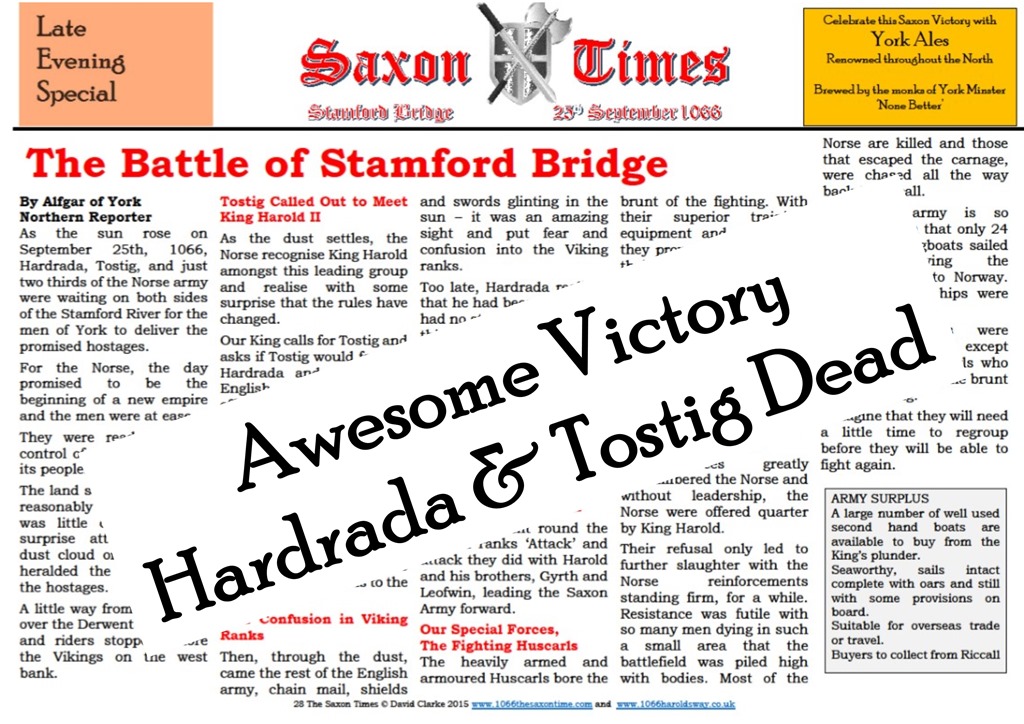
The Aftermath
The battle at Fulford is all but forgotten in the victory celebrations with the Norse finished as a fighting force and unlikely ever to be a threat again.
The battle at Stamford Bridge marked the end of the Northern invasion and for the moment King Harold and his troops can stay at York, resting and recovering from their victory.
Some commentators rue the loss of so many experienced men from the Northern Army. Their death may prove a problem for the King in the future. It has been a great victory but at a high cost to the King’s elite fighting men, the Huscarls.
This issue of The Saxon Times is included in the 1066 Saxon Times Resource Book: www.1066thesaxontimes.com
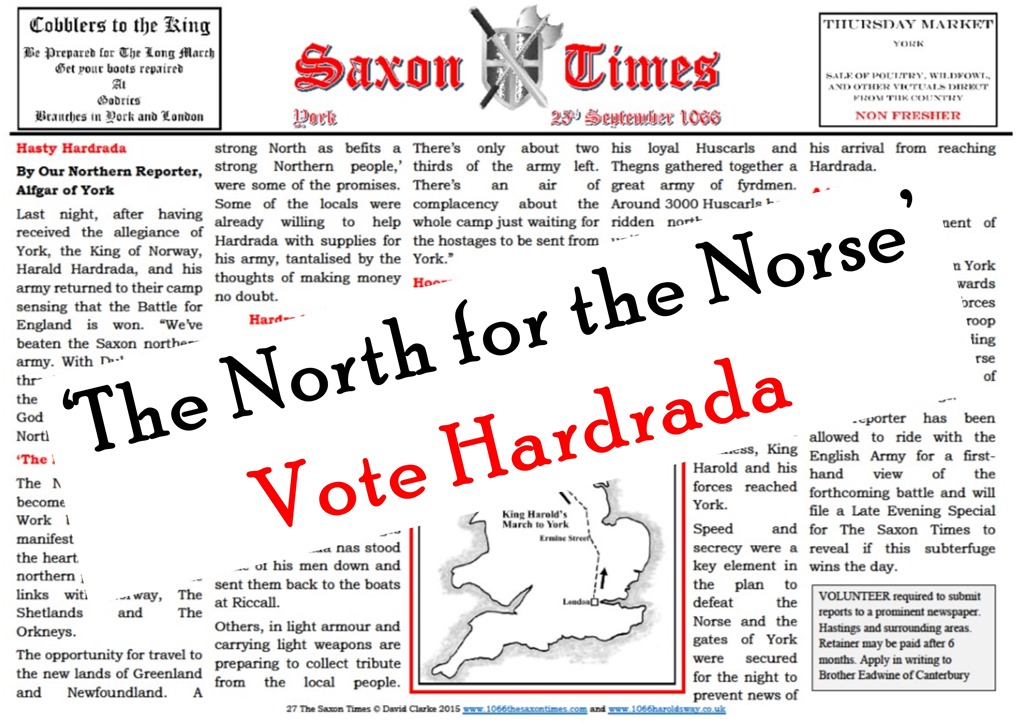
“I’ve beaten the Saxon northern army at Fulford and the North is ours” says Hardrada. “Ignore me at your peril Harold for I have the weapons and the army to make the world notice the Vikings again.”
Work begins on a new manifesto designed to win the hearts and minds of the northern people. Free trade links with Norway, The Shetlands and The Orkneys. The opportunity for travel to the new lands of Greenland and Newfoundland.
‘A strong North as befits a strong Northern people,’ were some of the promises.
Some of the locals were already willing to help Hardrada with supplies for his army, tantalised by the thoughts of making money no doubt.
But is Hardrada too hasty for there are rumours that the King is about……
This issue of The Saxon Times is included in the 1066 Saxon Times Resource book: 1066 The Saxon Times/Resources
Anglo-Saxon England and the Norman Conquest, 1060-66
The Saxon Times looks at how the events of 1066 may have been reported by an English newspaper and takes a chronological, topical and contemporary view of the tumultuous events that surround the Norman Conquest of England as they unfolded and appeared to its readers through the ‘eye-witnesses’ reports of the Saxon Times reporters.
By the time of the Norman Conquest, England had been Anglo-Saxon for 600 years but the death of King Edward the Confessor (1042–66) and the subsequent events that led to the Battle of Hastings changed England forever.
When King Edward the Confessor died in January 1066 nobody could have foreseen the year of bloodshed and mayhem that would take place. Everything seemed settled and peaceful.
England had developed a strong government, a prosperous economy and extensive trade links across the North Sea and the Channel.
A strict social system was headed by the aristocracy with most Anglo-Saxons ‘peasant farmers’, who in return for protection from a lord, owed him service such as military service in return for land to farm.
This military service had created a militia ‘the fyrd’ for defence of the realm which had finally provided some peace from Viking invasion and was one of the reasons that England had such a well-organised government.
The succession crisis of 1066, following the death of King Edward the Confessor meant that once again greedy, envious foreign eyes were being cast toward England.
Invasion was not far off.
The Saxon times is available from all good bookshops, the internet, Amazon
and
Learning outcomes
· How Anglo-Saxon society worked
· How Harold Godwinson became king of England
· Why other people also claimed the throne of England
· What happened in 1066: the year of the Norman invasion.
The Saxon Times aims to:
· Inspire curiosity to know more about the past
· Increase knowledge of and understanding about 1066
· Understand how people’s lives have shaped the nation
The Saxon Times will:
· Extend knowledge of the year 1066
· Identify the significant events of 1066 in chronological order
· Help develop perspective and argument
· Help weigh the available evidence
· Help understand the complexity of people’s lives and the relationships between different groups

Why did Duke William want a Papal Blessing? (Saxon Times Issue 10)
If you were Brother Ealdred in 1066, what you be your cure for Randulf’s wife’s headaches? (Saxon Times Issue 9)
Full details of this and other stories of 1066 are reported in The Saxon Times.
The Saxon Times and The Saxon Times classroom resources are available from TES and History Walks
Never miss The Saxon Times with email updates in your inbox
Subscribe to Email Updates: historywalks@aol.co.uk
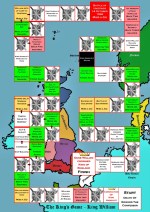
The Saxon Times King’s Games have been devised to give an idea of the timescales for the major events of that tumultuous year, 1066, in a fun and entertaining format.
They present the story of 1066 as a board game from the Death of King Edward the Confessor, the coronation of King Harold II, preparation for war to the Battle of Hastings. King William’s game includes his progress through southern England to his coronation on 25th December 1066.
They are ideal activities to introduce the concept of 1066, reinforce learning and/or as an end of term activity.
Each game is an A3 size pdf. file and will be e-mailed to you on proof of purchase.
For more information or to buy, CLICK HERE
The King’s Games are also available through TES.
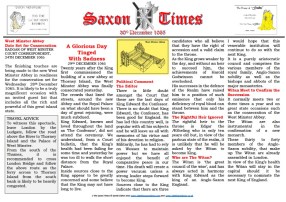
Tne Saxon Times is available as individual A3 posters to record the events of 1066 through the eyes of The Saxon Times reporters.
They aim to inspire curiosity to know more about 1066 and expand and develop knowledge and understanding of Britain’s past.
Each issue reports the major headlines of the day with comment, advertisements and maps as appropriate.
The A3 posters are educational, make ideal wall displays and meet the needs of the National Curriculum for History Key Stages 1 and 2 programmes of study
For more information or to buy, CLICK HERE
The Saxon Times posters are also available through TES.

The Medievalverse Newsletter brings history alive with contributions from around the world.
In the latest newsletter is a short review of The Saxon Times that highlights its use of a newspaper format to record the tumultuous events of 1066.
Click MEDIEVALISTS.NET to read the review of The Saxon Times
Many of the troubles of modern day society are mirrored throughout 1066 with enough examples of invasion, terrorist acts and subjugation for comparison. That fateful year also can also be contemplated and argued as a lesson in business strategy and administration. 1066 is right on so many different fronts.
Writing The Saxon Times allowed for some fun stuff too; adverts, medical pages, cooking pages and a few insights from the ‘people’. Events such as the report by the BBC that the ‘Battle of Hastings sword failed to sell at auction’ and ‘the discovery at Lewes of the skeletal remains of a man believed to have been injured at the battle’ are all be woven into the fabric of the paper.
Enjoy the read.
For more information on ‘The Saxon Times’, classroom resources and ‘How to Buy’ visit:
For TES (TImes Educational Supplement) Resources visit:
 1066thesaxontimes.com